Diabetes Mellitus And Insipidus
Diabetesmellitus is a metabolic disorder in which the body is unable to produce enough insulin to maintain the blood glucose level resulting in high glucose level in blood while diabetes insipidus is a disease characterized by excessive thirst with excretion of large amount of diluted urine. See more videos for diabetes mellitus and insipidus. Gestational diabetes insipidus during pregnancy, adh may be destroyed by the placenta, the nutrient-rich blood system that nourishes a fetus in-utero. this form of diabetes insipidus begins and ends with pregnancy. primary polydipsia this form of diabetes insipidus is the only type that does not cause dehydration.
Diabetesmellitus is characterized by high levels of sugar in the blood while diabetes insipidus is a disease where kidneys are unable to conserve water. diabetes insipidus (di) is a rare disease while diabetes mellitus is very common; "diabetes" diabetes mellitus and insipidus in general usage refers to diabetes mellitus, which is of 3 types — gestational, type 1 and type 2 diabetes. Diabetes insipidus (die-uh-bee-teze in-sip-uh-dus) is an uncommon disorder that causes an imbalance of fluids in the body. this imbalance makes you very thirsty even if you've had something to drink. it also leads you to produce large amounts of urine. while the terms "diabetes insipidus" and "diabetes mellitus" sound similar, they're not related. Diabetes insipidus is a different disease from diabetes mellitus. their names are similar, but the only things they have in common is that they make you thirsty and make you pee a lot.
Diabetes Insipidus Vs Mellitus Diabetesinsipidus Org
*diabetes insipidus facts medically edited by: melissa conrad stöppler, md. diabetes insipidus is not related to diabetes mellitus (type 1 and type 2 diabetes). ; diabetes insipidus is caused by problems related to the antidiuretic hormone (adh) or its receptor and causes frequent urination. ; there are four types of diabetes insipidus; 1) central diabetes insipidus, 2) nephrogenic diabetes. While the terms "diabetes insipidus" and "diabetes mellitus" sound similar, they're not related. diabetes mellitus — which can occur as type 1 or type 2 — is the more common form of diabetes. there's no cure for diabetes insipidus. but treatments can relieve your thirst and decrease your urine output.

Diabetes mellitus it is characterized by hyperglycemia (high blood sugar level), glycosuria (glucose in urine), polyuria (increased volume of urine due to the osmotic effect of glucose), polydipsia (excessivie thirst), polyphagia (excessive appetite). it is due to the hyposecretion of insulin or lack of insulin. Diabetes mellitus and diabetes insipidus are not related. (photo/u. s. food and drug administration) if you have been in ems long enough, you may well have encountered a patient with diabetes. Diabetesinsipidus and diabetes mellitus are two different types of diabetes in dogs, and both can be serious if left untreated. diabetes insipidus is also known as “water diabetes” and is the. Diabetesinsipidus and diabetes mellitus might share a name and have some similar symptoms, but they are two very different diseases. they also require two very different treatments. because diabetes mellitus involves blood sugar levels and diabetes mellitus and insipidus insulin resistance, it is important for most people to use a blood sugar monitoring device daily and eat low
Difference Between Diabetes Mellitus And Diabetes Insipidus
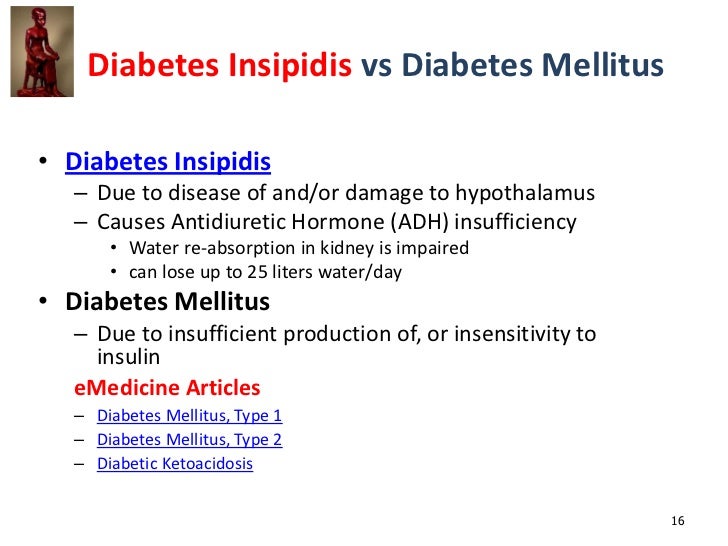
The main difference between diabetes mellitus and diabetes insipidus is that diabetes insipidus involves a problem with the production of antidiuretic hormone or kidney’s response to antidiuretic hormone (nephrogenic diabetes insipidus), whereas diabetes mellitus is caused by a deficiency of the pancreatic hormone insulin. Diabetesmellitus is also known as “sugar diabetes” and diabetes insipidus as “water diabetes” vasopressin controls the reabsorption of molecules in the kidneys by affecting the tissue's permeability. when there is enough vasopressin present, the water, after purification by the kidneys are re-absorbed into the tissues. Diabetes insipidus, often shortened to di, is a rare form of diabetes that is not related to blood sugar-related diabetes mellitus, but does share some of its signs and symptoms.. diabetes insipidus is simply excessive urination (polyuria) and complications thereof, caused by an antidiuretice hormone called a vasopressin.. read on to find out more about what diabetes insipidus is, how it. Diabetes mellitus is characterized by high levels of sugar in the blood while diabetes insipidus is a disease where kidneys are unable to conserve water. diabetes insipidus (di) is a rare disease while diabetes mellitus is very common; "diabetes" in general usage refers to diabetes mellitus, which is of 3 types — gestational, type 1 and type 2 diabetes.
Let us find out the key differences between diabetes mellitus and diabetes insipidus. diabetes mellitus. glucose is the main energy source in our body. for cells to use glucose and function optimally, the sugar level in the blood always should be within healthy ranges. the normal blood sugar level in our body controls by insulin hormone. Diabetes mellitus is more commonly known simply as diabetes. it’s when your pancreas doesn’t produce enough insulin to control the amount of glucose, or sugar, in your blood. diabetes insipidus is. Diabetes insipidus and diabetes mellitus—which includes both type 1 and type 2 diabetes—are unrelated, although both conditions cause frequent urination and constant thirst. diabetes mellitus causes high blood glucose, or blood sugar, resulting from the body's inability to use blood glucose for energy. Diabetes insipidus is not related to diabetes mellitus (type 1 and type 2 diabetes). diabetes insipidus is caused by problems related to the antidiuretic hormone (adh) or its receptor and causes frequent urination.

Diabetesmellitus and diabetes insipidus share the first word of their name diabetes mellitus and insipidus and some of the same symptoms. but that’s where the similarities end. these two diseases aren’t related. they cause. Central diabetes insipidus. if you have mild diabetes insipidus, you may only need to increase your water intake. if the condition is caused by an abnormality in the pituitary gland or hypothalamus (such as a tumor), your doctor will first treat the abnormality. Diabetes mellitus is due to disorder of pancreas while diabetes insipidus is a disorder of hypothalamus. diabetes mellitus is due to deficiency of insulin while diabetes insipidus is due to deficiency of adh. deficiency of insulin causes rise in blood glucose level while in diabetes insipidus there is no rise of blood glucose level.
Gyaninder p. singh, indu kapoor, in complications in neuroanesthesia, 2016. definition. diabetes insipidus (di) is a heterogeneous condition characterized by polyuria and polydipsia caused either due to a lack of secretion of vasopressin (antidiuretic hormone) from posterior pituitary, its physiological suppression following excessive water intake, kidney resistance to its action, or its. Diabetesinsipidus (di) is a hereditary or acquired condition which disrupts normal life of persons with the condition; disruption is due to increased thirst and passing of large volumes of urine, even at night. a systematic search of literature for di was carried out using the pubmed database for the purpose of this review. Diabetes insipidus (di) is a condition characterized by large amounts of dilute urine and increased thirst. the amount of urine produced can be nearly 20 liters per day. reduction of fluid has little effect on the concentration of the urine. complications may include dehydration or seizures.. there are four types of di, each with a different set of causes.
Diabetes insipidus an overview sciencedirect topics.
Diabetes insipidus is a different disease than diabetes mellitus. despite the similar names, the only things these two have in common is that they make you thirsty and make you pee a lot. if you. Diabetesmellitus is far more common than diabetes insipidus. diabetes insipidus, however, progresses far more rapidly. of the two conditions, diabetes mellitus is more harmful and harder to manage. More diabetes mellitus and insipidus images.


Comments
Post a Comment